
Four programs.
One constant presence.
Each program targets a specific gap in the Valley's safety net: direct, no-barrier, and measurable from day one.
HYDR8
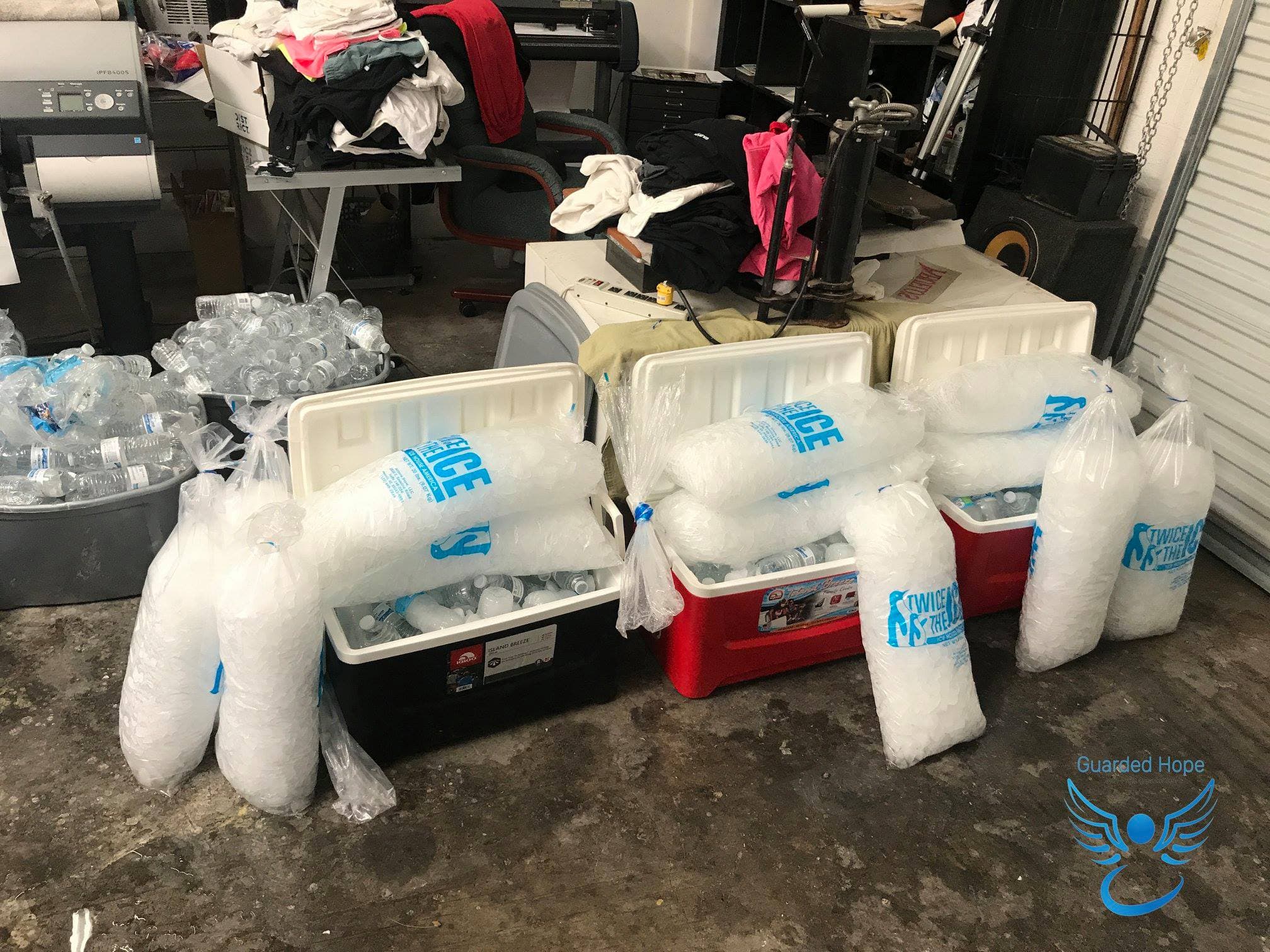
Phoenix summers kill. During the months of June through September, outdoor temperatures regularly exceed 110°F: conditions that are lethal for individuals without reliable shelter, hydration, or cooling. HYDR8 is Guarded Hope's flagship summer intervention, deploying volunteer teams every weekend to deliver water, ice, hygiene kits, and meals to unsheltered neighbors across the Phoenix metropolitan area.
Now in its 13th annual iteration, HYDR8 has grown from a single route to a multi-city operation covering downtown Phoenix corridors, encampment sites, and underserved neighborhoods where heat risk is highest.
Individuals experiencing unsheltered homelessness or living in severely heat-vulnerable conditions (no air conditioning, outdoor workers, seniors) across the Phoenix metro. Particular focus on high-foot-traffic corridors identified through ongoing outreach data.
Maricopa County; priority routes updated annually based on encampment population data and heat mortality reports from Maricopa County Environmental Services.
Heat mortality in Maricopa County reached 645 confirmed deaths in 2023 (Maricopa County Environmental Services). Street-level hydration and cooling have been identified as a Tier 1 intervention by the National Health Care for the Homeless Council.
How we deliver it.
60–80 volunteers per summer season. Shifts are 4 hours. No prior experience required.
Apply to volunteerWarm Wishes
Desert winters are deceptive. Phoenix temperatures regularly drop below 40°F overnight from November through February, dangerous for individuals living outdoors without adequate shelter or clothing. Warm Wishes addresses this gap with a targeted winter distribution campaign, providing cold-weather essentials to unsheltered neighbors across the Valley.
The program operates on the same no-barrier, no-intake model as HYDR8: supplies are delivered directly, without documentation requirements, by trained volunteer teams on regular weekend routes.

Unsheltered and marginally housed individuals across the Phoenix metro lacking adequate cold-weather clothing, bedding, or shelter access. Priority to individuals identified on HYDR8 routes who have maintained outdoor residence through the fall.
Maricopa County-wide, mirroring HYDR8 routes. Additional pop-up distributions at identified encampment sites where cold exposure risk is highest.
Arizona 211 data shows shelter bed shortfall of 2,400+ on average winter nights in Maricopa County. Clothing and thermal protection are identified risk-reduction interventions for hypothermia prevention (National Alliance to End Homelessness).
How we deliver it.
40–60 volunteers per season. Includes supply sorting, packing, and route distribution shifts.
Apply to volunteerWomen of Influence
Women of Influence is Guarded Hope's year-round mentorship and empowerment program, designed for women navigating homelessness, housing instability, domestic violence recovery, or re-entry from incarceration. The program pairs participants with trained community mentors, provides access to workforce development resources, and builds long-term support networks.
Unlike the direct-distribution programs, Women of Influence involves sustained, relationship-based engagement: participants are enrolled in multi-week cohorts and supported through structured goal-setting and accountability partnerships.

Women aged 18+ in the Phoenix metro experiencing homelessness, housing instability, domestic violence recovery, or re-entry from incarceration. No income verification or documentation required for enrollment.
Program activities primarily based in Phoenix. Referrals accepted from partner organizations across the metro.
Women make up 40% of the unsheltered population in Maricopa County (2023 Point-in-Time Count). Trauma-informed mentorship models have shown 30–45% improvement in housing stability outcomes in peer studies (ICH, 2022).
How we deliver it.
Mentors commit to 6-month minimum. Training provided. Background check required.
Apply to volunteerUrban Arts Academy
Urban Arts Academy is Guarded Hope's youth-focused education and empowerment program, serving young people whose families are experiencing homelessness, housing instability, or economic hardship in the Phoenix metro. The program uses creative arts, design thinking, and entrepreneurship as the vehicle for skill development, combining technical instruction with mentorship, business basics, and social-emotional learning.
The program is grounded in the belief that creative confidence and entrepreneurial thinking are protective factors against poverty, and that young people growing up in crisis deserve access to the same enrichment programming available to their housed peers.
Youth aged 10–24 from families experiencing homelessness, housing instability, or economic hardship. Program is free; no documentation required. Siblings and household members actively welcomed.
Phoenix-based programming with outreach to families identified through street outreach and partner organizations.
Arts integration programs show significant reductions in school dropout risk for youth experiencing homelessness (National Endowment for the Arts, 2021). Entrepreneurship education correlates with higher economic mobility in low-income youth cohorts (Kauffman Foundation, 2022).
How we deliver it.
Teaching artists, business mentors, and event support volunteers welcome. Creative professionals in any discipline encouraged to apply.
Apply to volunteerFrom inputs to impact.
How we measure success.
Guarded Hope tracks program outputs (items distributed, people reached, contacts made) through volunteer field logs submitted after each shift. Outcome data (housing stability, employment, program completion) is collected through follow-up outreach and partner organization reporting. Annual program totals are verified by independent auditors as part of the 990 filing process.
Grant funders requiring detailed outcome data, program narratives, or site visits are encouraged to contact us directly. We are committed to full transparency about what we measure, how we measure it, and where our data has gaps.
Every program runs on people.
No paid field staff. Every route, every session, every shift. 100% volunteer.